Too Many Redlines

[Gaille Energy Blog Issue 99]

Energy contracts are long documents, often spanning more than 100 pages.  It can take a couple of days just to carefully read one.  Changing one sentence in an energy contract can be like pulling a string on a sweater.  One change leads to another, and the second to yet more.  So, efficient legal work demands restraint when it comes to redlining an agreement.  Only redline what needs to be changed.  Unfortunately, the trend seems to be going the other way for several reasons:

  • Unsupervised Young Lawyers.  Lazy partners “manage” their young lawyers by giving them an agreement from an earlier deal and telling them to redline the new contract to make it look like the old one.  The young lawyer may have no idea which differences are, relatively speaking, more important than others.  This leads to the young lawyer turning the target contract into the original one.  If the young lawyer was being properly supervised, the partner would dial back these changes to only those that really matter—and use the differences as a teaching moment.  More and more, though, I am seeing unfiltered redlines from young lawyers who have little understanding of the provisions they are revising.  Maybe this is because the percentage of lawyers who are partners at the 200 largest law firms has dropped from 31.9% to 22.2% while the number of lawyers at these firms has doubled—which likely translates into less supervision and training of young lawyers.  20 Trends from 20 Years of Am Law 200 Data (July 2022).
  • One-Sided Contracts.  The other driver for too many redlines is when lawyers serve up a one-sided agreement.  These lawyers operate on the assumption that they can “win” the negotiation by starting with extreme positions.  Such attempts at anchoring merely lead to more redlining and the wasting of everyone’s time and money.  Lawyers and clients will have to sit through hours of negotiations to reach the same middle-of-the-road terms that everyone else in the industry is agreeing to.
  • Old Contract Forms.  The terms and conditions of energy agreements have evolved considerably over the course of my career.  A contract from decades ago is missing many of the provisions that are now industry standard.  There are still in-house counsel downloading forms from floppy disks in the bowels of the server room that date back to the premier of Ferris Bueller’s Day Off.  For those of you who may not have been of movie-going age then, that was 1986.  Please update your forms regularly.
  • Circling Back.  Contract negotiations are supposed to resemble a funnel.  The most redlines are on the first read.  Then, each side accepts some and proposes compromises on others, gradually reducing the number of redlines.  And one day, the two sides have nothing further to discuss.  In order for this process to work efficiently, neither side has the right—on a subsequent read of the document—to make changes to any language that the other side did not revise or delete on the last version.  Doing so is the sin of “circling back.”  It usually means a lawyer was not paying attention the first time around and missed something.  Lawyers who “circle back” lose the respect of their peers and cost everyone time and money with more redlining.    
  • Swarm Negotiating Tactics.  The swarm negotiating tactic occurs when experienced lawyers substantially rewrite an otherwise decent agreement—by redlining many provisions that did not have to be redlined.  They know which clauses are the most important, but they hope that their important changes will slip through due to the other side’s lawyer not wanting to spend hours sorting through the swarm.  It’s sort of the “herd of zebras crossing the crocodile infested river” approach to redlining.  The more redlines, the more that survive.  Unlike the African savannah, though, this tactic is prone to failure.  Experienced lawyers on the other side will take the time to sort through the swarm, and they will simply accept all of the harmless redlines and reject every single redline that matters.  In contrast, if lawyers only redline those provisions that materially improve their clients’ positions, then the other side has to accept some of those redlines.  After all, who rejects every comment?                    

In 1986, Wachtell, Lipton, Rosen & Katz had the highest profits per partner of any law firm—$880,000, which adjusted for inflation would equal about $2,500,000 today (Washington Post, July 10, 1986).  In 2022, Wachtell’s profits per partner were $7,300,000 (Economist, August, 2, 2023).  So, between 1986, when the first Top Gun movie was the number one movie in America, and 2022, when its sequel Top Gun: Maverick took the same honor, top law partners bested inflation by 3X.  Given the high rates charged by today’s legal talent, we should be mindful of the above causes for too many redlines, which needlessly drive up legal costs for our clients.       

About the Gaille Energy Blog. The Gaille Energy Blog discusses issues in the field of energy law. Scott Gaille is the Managing Partner of GAILLE PLLC, a Lecturer in Law at the University of Chicago Law School, the author of eight articles in the Energy Law Journal, and co-author of the award-winning travel book, Strange Tales of World Travel (Bronze Medalist, IPPY Awards for Best 2019 Travel Essay; ForeWord Magazine Finalist for Best Travel Book of 2019; North American Travel Journalists’ Honorable Mention for Best Travel Book of 2019).

Incentive-Based Compensation for Actual Cost and Time & Materials

 [Gaille Energy Blog Issue 94]

Gaille Energy Blog Issue 93 explained the following four types of construction/services compensation and the incentives created by each:

  • Lump Sum
  • Unit Price
  • Time & Materials (T&M)
  • Actual Cost

This issue discusses how incentive-based compensation mechanisms can be added to Actual Cost and T&M commercial structures.

In Lump Sum and Unit Price contracts, a contractor is paid for achieving defined results:

(i)         Lump Sum = successful completion of all of the work; or

(ii)        Unit Price = successful completion of an item of work.

As such, a contractor bears (most of) the cost of poor productivity (and reaps the rewards of good productivity).

In contrast, under the T&M and Actual Cost approaches, a contractor is paid for the amount of time or dollars it spends on a project—not the results. This means that the project owner is at risk of bearing the costs of poor productivity (nor does the contractor enjoy any additional profits from good productivity). In an effort to improve these incentives, the industry has developed a variety of contractual approaches, including:

  • Actual Cost, Fixed Fee [No Additional Fee for Cost Overruns]. When using the Actual Cost approach, a contractor’s profit and overhead can either be paid as a percentage of dollars spent or as a fixed fee that is calculated based on the initial estimate of the project’s cost. Under the percentage approach, the amount of the contractor’s fee is determined by how much it actually spends over the course of the project (e.g., 15% multiplied by whatever it spends); under the fixed fee approach, the amount of a contractor’s fee is determined when the contract is signed using the estimated cost of the project and does not vary thereafter based on what the contractor actually spends (e.g., 15% multiplied by the estimated cost of the project on day one). This creates a soft incentive for a contractor to control costs because, as a practical matter, it makes no profit on expenditures in excess of the original estimate. The contractor also makes a higher percentage profit if it spends less than the original estimate. The below figure illustrates this approach.
  • Reduced T&M Rates [No Additional Fee for Cost Overruns]. When using the T&M approach, a contractor’s profit and overhead are built into its rates. Even so, an owner can create a similar incentive to the Actual Cost fixed fee by using a rate discount. For example, after a contractor’s total billings have exceeded the original estimate, each rate can be discounted by 15%. This creates an incentive for the contractor to control costs because it makes no profit on expenditures above the original estimate.
  • Actual Cost, Target Price [Contractor Profit & Overhead at Risk + Opportunity to Earn a Bonus]. For owners desiring a stronger incentive, the contract can include an adjustment mechanism that increases or decreases the fixed fee based on whether a contractor spends more or less than the original estimate (which can be referred to as the “target price”). The contract can dial up or down the percentage to calibrate the strength of the incentive. Under this approach, the worst case for a contractor is that its fixed fee is entirely lost; the best case may be that the fixed fee has doubled. As such, the contractor places some or all of its fixed fee at risk in exchange for the possibility of earning a larger fixed fee if it spends less than the target price. The below figure illustrates this approach.
  • T&M, Target Price [Contractor Profit & Overhead at Risk + Opportunity to Earn a Bonus]. Although T&M rates include an imbedded fee within the rates themselves, it also is possible to create a target price mechanism using the original T&M estimate. For example, the parties could assume that 15% of the original estimate represents the contractor’s fee (profit and overhead). This 15% amount is then placed “at risk” in a manner similar to how a contractor’s fixed fee is placed at risk in the Actual Cost, target price approach. At the end of the project, a bonus is paid or a deduction is made based on whether the actual T&M charges were less than or greater than the original estimate. The amount of the bonus or deduction cannot exceed 15% of the T&M costs, thereby placing only the contractor’s profit and overhead at risk.
  • Guaranteed Maximum Price [Contractor Profit, Overhead & Costs at Risk Above the GMP + Opportunity to Earn a Bonus]. Guaranteed Maximum Price (“GMP”) agreements can operate in conjunction with either T&M or Actual Cost commercial structures. In both cases, a contractor submits invoices containing either T&M or Actual Cost charges, which are paid up to the amount of the GMP. The GMP is thus the maximum amount that the contractor can get paid for the project. Once the GMP is reached, the contractor receives no further payments and must complete the remaining work at its sole cost. The tradeoff for contractor accepting a GMP is the opportunity to earn a “shared savings payment,” but only if and to the extent that the contractor’s billings are less than the GMP. The shared savings payment is calculated as a percentage of the “savings” achieved when the contractor spends less than the GMP. In the most generous case, a contractor may receive up to 50% of the difference between the GMP and its invoices (although the percentage is usually less). The below figure illustrates this approach.
  • Not-to-Exceed [Contractor Profit, Overhead & Costs at Risk Above the Not-to-Exceed Amount]. A not-to-exceed amount can be used in either a T&M or Actual Cost agreement. It operates similar to a GMP but without any opportunity for the contractor to earn a bonus. The contractor receives its T&M rates or Actual Costs until the not-to-exceed amount is reached. Once the contractor has been paid the not-to-exceed amount, no further payments are made and the contractor must complete the remaining work at its sole cost. This structure gives the owner all of the benefits of the Lump Sum (no cost overruns are paid) while also allowing the owner to retain all of the savings (when cost savings occur).
  • Compensation Ceiling. I have started using a different defined term—“compensation ceiling”—to describe a not-to-exceed amount that is substantially higher than the estimated cost. For example, a “compensation ceiling” may be 1.2x or 1.3x the original estimate, thereby providing a contractor with a comfortable margin for overruns. The primary purpose of such a compensation ceiling is to establish a worst-case backstop for the owner while providing a contractor with a cushion to incur cost overruns without penalty. The secondary purpose of the compensation ceiling is to change the contractor’s mindset regarding T&M or Actual Cost reimbursement. The existence of a payment ceiling—even one that is much higher than the expected cost of the work—incentivizes the contractor to control costs during the early stages of the project (at some point, however, the incentive diminishes because the contractor has completed enough of the project within budget to no longer be at risk of exceeding the ceiling). The existence of a compensation ceiling should also make the contractor’s project estimate more accurate. I recently negotiated a T&M contract that proposed a compensation ceiling calculated as 120% of the contractor’s original estimate. During the first negotiation session, the contractor objected to using its estimate in this way, describing its estimate as a “back-of-the-envelope” number. When one considers that owners rely on estimates for budgeting and board approval purposes, compensation ceilings serve an important purpose of helping to discourage sloppy estimating (and also, potentially, underbidding in T&M or Actual Cost situations).

Keep in mind that parties to construction and services agreements typically use Actual Cost and T&M commercial structures when conditions of uncertainty make it difficult for contractors to accurately bid a Lump Sum or Unit Price—or lead to contractors inflating the Lump Sum or Unit Prices with excessive contingency to compensate for such uncertainty. Under conditions of uncertainty, contractors are more willing to risk some or all or their profit and overhead—as long as they are certain to have their out-of-pocket costs reimbursed. It is easier to risk breaking even than bankruptcy. The below figure illustrates how the selection of contractual approaches varies with cost uncertainty:

Finally, it is important to consider that conditions of uncertainty can also be addressed via price adjustment clauses. For example, if a contractor is concerned about the risk of bad weather increasing costs, the parties could still select a Lump Sum commercial structure but add a provision granting the contractor price adjustments (i.e., increases to the Lump Sum) for costs caused by bad weather. The choice between addressing cost uncertainty through price adjustments versus commercial structure depends on how many types of cost uncertainty exist, how easy it is to define them, and how frequently they are expected to arise. At some point, there may be such a high and varied quantity of uncertainty at sufficient frequencies of occurrence that it is more efficient to shift to an Actual Cost approach than to manage the uncertainties through price adjustments.

About the Gaille Energy Blog. The Gaille Energy Blog (view counter = 167,229) discusses issues in the field of energy law, with periodic posts at www.gaillelaw.com. Scott Gaille is a Lecturer in Law at the University of Chicago Law School, an Adjunct Professor in Management at Rice University’s Graduate School of Business, the author of three books on energy law (Construction Energy Development, Shale Energy Development, and International Energy Development), and co-author of the award-winning travel compilation, Strange Tales of World Travel (Bronze Medalist, IPPY Awards for Best 2019 Travel Essay; ForeWord Magazine Finalist for Best Travel Book of 2019; North American Travel Journalists’ Honorable Mention for Best Travel Book of 2019).

4 Types of Construction Compensation: Lump Sums, Unit Prices, Time & Materials, and Actual Costs

 [Gaille Energy Blog Issue 93]

This article explains the differences between the four types of compensation typically used in energy construction agreements:

  • Lump Sums. The contractor is paid a flat price for successful completion of all of the work.  For example, a contractor might be paid a lump sum of $10,000,000 for the entire project.  No matter what the contractor actually spends, it will only be paid $10,000,000.  Thus, the contractor makes money if it actually spends $10,000,000 or less and potentially loses money if it spends more than $10,000,000.     
  • Unit Prices (Item-Based Rates)The contractor is paid a flat price for successful completion of work items. Each unit price is all-inclusive and embodies all costs, overhead, and profit for completing the specific work item. For example, a contractor might be paid a unit price of $1,000,000 per mile of installed pipeline.   No matter what the contractor actually spends per mile of pipeline, it will only be paid $1,000,000 per mile.  Thus, the contractor makes money if it actually spends $1,000,000 or less per mile and potentially loses money if it spends more than $1,000,000 per mile.        
  • Time & Materials (Time-Based Rates)The contractor is paid time-based rates (established by a rate sheet) for personnel and equipment on an hourly, daily, weekly, or monthly basis.  Each rate is all-inclusive and embodies all costs, overhead, and profit for deploying a given person or piece of equipment to the project (for the applicable period of time).  For example, a contractor might charge $1,150 for a repair crew, of which $1,000 represents the cost of the personnel, truck, and equipment and $150 is the contractor’s profit and overhead.  Subject to other contract controls (such as good industry practices), a contractor doing work on a time & materials basis always recovers its costs and always makes a profit.  Every hour worked is an hour paid.  
  • Actual Costs (Cost-Plus or Cost Reimbursable)The contractor is reimbursed its actual and reasonable out-of-pocket costs for the project plus a fee.  The fee includes all of the contractor’s profit and overhead and can either be a fixed number (that does not vary based on the amount actually spent) or a percentage of the actual costs incurred.  For example, the parties might expect to spend $100,000,000 on a project.  The contractor could either negotiate a fixed fee of $15,000,000 or agree to charge 15% of whatever the actual costs may be. Subject to other contract controls (such as good industry practices), a contractor doing work on an actual cost basis always recovers its costs; how much profit it recovers is a function of whether or not the fee is fixed or calculated on a percentage basis.  If the fee is a percentage basis, the outcome is similar to time & materials.  The contractor always makes a profit because every dollar of actual costs spent results in a percentage fee being paid.  However, if the fee is fixed, the contractor will make a higher profit percentage if it spends less than expected and a lower profit percentage if it spends more than expected. The below figures illustrate how the fee earned by the contractor varies between the percentage and fixed options:                

Project owners must balance the advantages and disadvantages of the four types of compensation. While lump sums place the risk of cost overruns on the contractor, the contractor will usually demand a higher price for accepting this risk. The more risks a project faces, the more contingency a contractor will add to the lump sum. Such contingency can result in the lump sum being much higher than the estimated cost at completion on an actual cost basis. In such cases, owners can achieve cost savings by switching to one of the other compensation mechanisms.  If the cost uncertainty is a result of how many units will be required, then a unit price mechanism may be best.  If the cost certainty is more generalized, the actual cost with fixed fee approach may be the most efficient mechanism.  

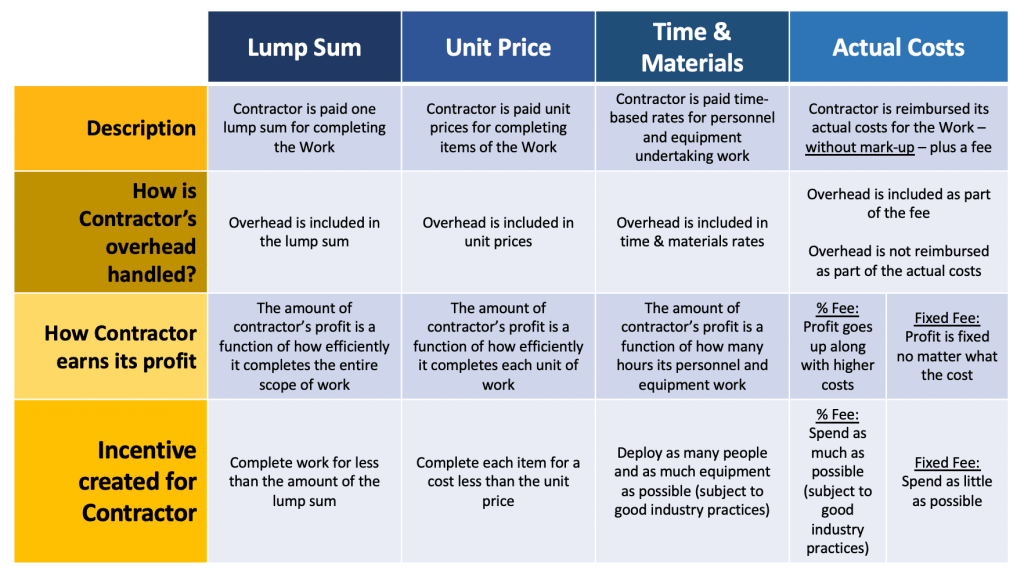
The below table summarizes the four principal types of contractor compensation and the incentives created by them: 

It also is important to consider how “price adjustments” may affect the allocation of risks in any of the above types of compensation. Price adjustment clauses provide the contractor with additional compensation when a specified event causes increased costs. For example, if the contractor encounters an unanticipated site condition, a price adjustment may increase the lump sum payable to contractor (in a lump sum agreement) or increase the amount of the contractor’s fixed fee (in an actual cost with fixed fee agreement). See Adjustment Clauses in Services and Construction Agreements [Gaille Energy Blog Issue 92]. The key point for designing compensation mechanisms is that price adjustments are another tool the parties can use to manage the risk of cost overruns.  For example, if the contractor is inflating a lump sum due to the risk of bad weather, then the solution may be keeping the lump sum structure, reducing the amount of the lump sum, and providing a price adjustment for adverse weather days (instead of, for example, switching to an actual cost approach).

Another option for addressing risk is the use of more than one type of compensation within the same construction agreement.  If only a portion of a project is subject to cost uncertainty, it can be compensated differently.  For example, consider a horizontal directional drill with a high variability of cost.  The contract could provide that all of the project is compensated on a lump sum except for the problematic HDD, which would be compensated on an actual cost with fixed fee basis. Similarly, under actual cost agreements, certain discrete portions of the work may be paid for on a lump sum basis (such as mobilization and demobilization) because their costs are more certain.

In any event, it is critical that the construction agreement accurately define both the different types of compensation being used and which portions of the contractor’s work are compensated by each methodology.  People often use the same word or words to describe different types of compensation mechanisms. Some people use the words “cost reimbursable” to refer to time & materials – while others use them to refer to actual cost basis. “Rate-based” may refer to time & materials rates or unit prices.  The best way to avoid confusion (and disputes) is to ensure that the construction contract clearly defines each type of compensation being used and what work will get paid by it.

In our next post, we will examine how the above types of compensation structures can be supplemented with additional controls/incentives, such as not-to-exceed amounts, guaranteed maximum prices, and formulaic (cost-based or schedule based) adjustments to the actual cost fee.

About the Gaille Energy Blog. The Gaille Energy Blog (view counter = 162,119) discusses issues in the field of energy law, with periodic posts at www.gaillelaw.com. Scott Gaille is a Lecturer in Law at the University of Chicago Law School, an Adjunct Professor in Management at Rice University’s Graduate School of Business, the author of three books on energy law (Construction Energy Development, Shale Energy Development, and International Energy Development), and co-author of the award-winning travel compilation, Strange Tales of World Travel (Bronze Medalist, IPPY Awards for Best 2019 Travel Essay; ForeWord Magazine Finalist for Best Travel Book of 2019; North American Travel Journalists’ Honorable Mention for Best Travel Book of 2019).

3 Types of Indemnities (Energy Construction)

[Gaille Energy Blog Issue 79]

An indemnity is one party’s agreement to hold another harmless for certain types of claims or losses.  A typical definition of Indemnify would be as follows:

“Indemnify” means release, reimburse, protect, indemnify, compensate, make whole, make good, hold harmless, and defend (including taking such steps and incurring such fees, costs, and expenses as may be necessary to defend any Claims/Losses, whether pre-litigation or in connection with any proceedings in any court or other tribunal, and shall include the obligation to pay attorneys’ fees, court costs, and expert fees).

Why do we bother with indemnities? After all, isn’t everyone in the United States already liable for the damages they cause?  While it’s true that amounts owed as a matter of law might be similar to those owed under an indemnity, this is not always the case. For example, consider an accident at a construction gate between a contractor’s vehicle and a third party. The third party sues both the contractor and the project owner, causing the owner to incur legal fees.  Without a contractual indemnity obligation by the contractor to pay the owner’s legal fees, it’s unlikely that the owner would be able to recover them (at law).

Contractual indemnities have been developed to provide more certainty regarding which party is responsible for various types of claims and losses.  While these provisions vary, it is helpful to characterize indemnities as falling into one of three categories:

  • Control-based. A control-based indemnity allocates risk for loss to the party in control of a project. If something goes wrong at the construction site, the control-based indemnity presumes that the contractor running the site is responsible.  The owner does not need to prove that the contractor was negligent; the owner only needs to show that it incurred a loss related to the contractor’s work.
  • Fault-based. A fault-based indemnity allocates risk for loss to the party that was at fault.  Under a fault-based indemnity regime, a contractor would only be responsible for indemnifying the owner for a loss to the extent the contractor’s negligence caused it.  While a fault-based regime more closely mirrors what a party would be typically liable for (at law), the indemnity can cover losses (such as legal fees) that might not otherwise be recoverable.
  • Identity-based (or knock-for-knock). An identity-based indemnity—typically referred to as knock-for-knock—allocates risk based on the identity of the injured person, irrespective of which party was at fault. Under an identity-based indemnity regime, each party is entirely responsible for any losses sustained to its property or incurred by its personnel—even if they were caused by the other party’s negligence. Knock-for-knock indemnities often reverse the background law, protecting an otherwise responsible party from liability.

Which Indemnity Regime Is Appropriate for Which Project?

When the contractor responsible for building an energy facility has control over the means and methods of the work—and execution of the work occurs within a reasonably defined physical area—the control-based indemnity regime creates appropriate incentives.  The party in control of the work space is deemed to be responsible for any and all losses occurring there.  The owner need only prove that it has suffered a loss arising from the contractor’s work (and the amount of the loss).  There is no requirement to prove that the contractor breached a duty.

This is in contrast to a fault-based indemnity regime, in which a contractor can dispute whether or not it breached a duty—or alternatively, point the finger for the loss at a third party. For example, consider an accident at the project’s gate between two vehicles, one belonging to the contractor and the other to a third party.  The third party sues not only the contractor but also the owner.  The owner incurs $100,000 of legal fees defending the matter. A jury finds that the contractor was 60% at fault, the third party was 40% at fault, and the owner was not at fault.  In a typical fault-based regime, the contractor’s indemnity would be limited to 60% of the costs incurred by the owner—and the owner would be out-of-pocket $40,000 in legal fees for an accident it had no involvement with.

But what happens if the owner was responsible (in whole or part) for the loss?  Although the presumption is that the contractor is responsible for all losses incurred by the owner, the contractor usually has the opportunity to prove that the owner was at fault—thereby overcoming the presumption of the contractor’s liability.  For example, consider an accident at the project’s gate between two vehicles, one belonging to the contractor and one to the owner.  If the contractor can prove that the owner was 30% responsible for the accident, the contractor’s obligation to indemnify the owner would be reduced from 100% of the owner’s loss to 70% of the owner’s loss.

Identity-based or knock-for-knock indemnities are designed for work spaces where many contractors are working in close quarters—and no single contractor has any real control over the work space. The knock-for-knock indemnity arose in the context of high-risk offshore energy projects involving multiple contractors:

“It was acknowledged by the industry that contractors’ balance sheets would be unable to cope with potential liability for the destruction of an entire oil rig facility and it also assisted with risk allocation at a practical level, because in an off-shore environment it was common for the sharing of tasks between different contractors and a blurring and overlapping of responsibilities, making it difficult to determine fault if an issue occurred…The use of knock-for-knock indemnities may not be appropriate in onshore projects in circumstances where each contractor’s site during the construction period is clearly defined, the location is not inherently hazardous and the risks are not as significant as in an off-shore environment.” (Tina Middis, Knock for Knock Indemnities—Are They Appropriate for On-Shore Infrastructure Projects?)

Ms. Middis offers two rationales for knock-for-knock indemnities: (a) sharing of tasks/blurring of responsibilities; and (b) contractors being unable to cope with a catastrophic loss.  But why should a knock-for-knock indemnity be used to limit the quantum of liability?  There are many instances when a contractor with absolute control over a work site could cause catastrophic liability—such as during the construction of pipeline crossing installations.  A better approach in such cases is to require a control-based indemnity regime but provide a maximum liability limitation.  In such cases, (i) maximum liability limitations should never be applicable to third party losses and (ii) owner recoveries from any insurance coverage required by the contract should not apply toward the cap.

Nonetheless, some contractors continue to seek a knock-for-knock regime for projects where there is no blurring of responsibility.  Their lawyers tout the reciprocity of each party being responsible for its own losses.  The reality is often different—since it is more likely that the contractor will cause damage to the owner’s personnel and equipment than the other way around. The contractor may have thousands of people and hundreds of vehicles moving on the site while the owner may only have a few inspectors. It’s improbable that the owner’s inspectors are going to cause damage or injury to the contractor. It’s much more likely that the contractor is going to cause losses to the owner. This exposes a fundamental flaw of knock-for-knock indemnities. On paper, the language may look reciprocal and fair, but in practice, one party may be much more likely to avoid liability.

As such, owners of new onshore facilities (and offshore facilities where one contractor is responsible for construction) are adopting control-based indemnities that are proportionately reduced only if the owner’s negligence contributed to the claim or loss.  A typical clause reads as follows:

Contractor shall Indemnify the Company Group from any and all Claims/Losses directly or indirectly based on, in connection with, relating to, or arising out of the Work or any of Contractor Group’s actions or inactions under this Agreement, including any one or more of the following [list of examples]. The preceding Indemnity obligation shall apply regardless of whether any of the Company Group was concurrently negligent (whether actively or passively), grossly negligent, strictly liable, or otherwise in breach of any duty whatsoever (whether contractual, statutory, or otherwise); provided, however, that the Contractor’s liability and Indemnification responsibility in such a case shall be determined in accordance with principles of comparative responsibility such that Indemnification by Contractor shall be reduced by such member of Company Group’s percentage of negligence, gross negligence, or willful misconduct for such Claims/Losses.

The “list of examples” (bracketed above) can be used to enumerate typical circumstances for which the indemnity applies:

  • personal injury to or death of any Person and damage to or destruction of property in connection with the Work;
  • damage caused by any of Contractor Group or the Work to third party facilities;
  • costs arising from damage caused by any of Contractor Group to the Work, Facility, or Company Group’s existing facilities and property;
  • any violation of any Applicable Law or Codes and Standards by any of Contractor Group;
  • failure to comply with Good Industry Practices by any of Contractor Group; or
  • injury to the Environment during the course of the Work.

The use of examples helps to focus the parties on the allocation of risks—and also improves the ease with which the indemnity can be enforced (if the loss falls within one of the examples).

Thinking about indemnities as falling within one of three classes helps practitioners to better design indemnity regimes that suit the risks of a specific project:

  • Control-based indemnities generally should be used when one contractor is in control of a defined work place (even if the one contractor has many subcontractors working for it);
  • Identity-based indemnities (knock-for-knock) generally should be used when there are many contractors working alongside of each other and no contractor can be fairly described as being in control of the work or the work location; and
  • Fault-based indemnities generally should be used when neither of the preceding applies.

Note: The Gaille Energy Blog is now back after a hiatus due to publishing deadlines for my new book, Strange Tales of World Travel.

About the Gaille Energy Blog.  The Gaille Energy Blog (view counter = 107,957)) discusses issues in the field of energy law, with periodic posts at www.gaillelaw.com. Scott Gaille is a Lecturer in Law at the University of Chicago Law School, an Adjunct Professor in Management at Rice University’s Graduate School of Business, the author of three books on energy law (Construction Energy Development, Shale Energy Development, and International Energy Development), and the co-author of just-released Strange Tales of World Travel.

Strange Tales of Energy Travel: Togo’s Crucifixion Beach

[Gaille Energy Blog Issue 76]

Energy companies often do business in places that are not part of the Instagram travel circuit.  Visas can be difficult to obtain, and tourism is virtually non-existent.  These nations also tend to be home to extraordinary characters with unusual stories.  Whenever I travel to a new country, I enjoy visiting with its locals.  I always like to ask them:

“What’s the strangest thing you’ve ever seen or experienced here?”

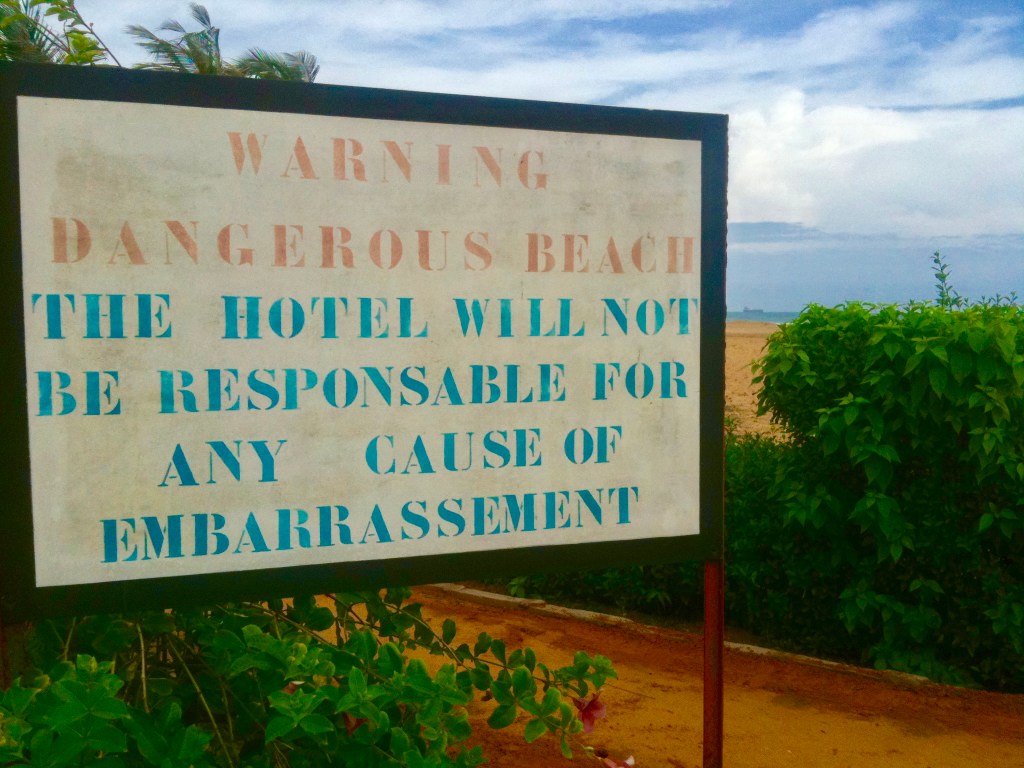
The Republic of Togo is a West African nation sandwiched between Ghana and Benin.  In 2010, I made several trips there to negotiate a Production Sharing Agreement on behalf of a wealthy Houstonian.  My hotel in Togo’s capital, Lome, fronted the beach.  One day after breakfast, I started down the path toward the beach when I came upon this sign.

I was reconsidering my walk on the beach when a man in a white suit came over and introduced himself as the hotel’s manager.  I asked him what was the strangest thing he had ever seen at the hotel.

The best tales begin quickly, almost without pause. There’s no need to search one’s memory for the truly shocking.  Such memories reside at the forefront of our consciousness, waiting to spill out.  Witnesses want others to hear what they’ve seen.  So it was with the hotel manager.

“The strangest thing I ever saw was on this beach.  The President, who had ruled Togo for 38 years, had just died. The man was a legend.  He had survived a plane crash and several assassination attempts, including one by his own bodyguard.  The President wore the smashed bullets removed by his surgeon as a necklace, symbolic of his supposed immortality.  Togo published comic books recounting his escapades, and an entourage of 1,000 dancing girls sang his praises.

The Father of Togo

“Yet the Grim Reaper finally caught up with our ruler in 2005, when he died of natural causes in Europe.  His American-educated son was installed as the new President, leading to violence between forces loyal to the ruling family and their opposition.

“In the midst of the war for succession, I was awakened early one morning by the sound of many birds.   I walked outside my villa and looked into the sky.  There were hundreds of birds, all flying toward the beach.  I followed them down this very path, and that’s when I saw it—the strangest thing.

“As far as my eye could see were logs, implanted as columns into the sandy beach—like telephone poles.  Hanging from each log were mutilated, nude bodies being pecked at by birds.  They had been the opposition.  Now their remains were on public display, crucified for all to see.  As the day went on, friends and family who were missing loved ones came to the beach to look for them. One by one, the logs were pushed over, and the bodies taken away.

“People had wondered whether the son had what it took to hold onto power.  Was he as tough as his father?  Once I saw the crucifixions, I knew—and everyone else did, too.  The son wasn’t going anywhere. He’s still in charge today.”

I made several trips back to Togo, negotiating the Production Sharing Agreement. We were two weeks from signing when a major oil company swooped in and took our deal.  Our competitor had been tipped off by the seismic company that ran the data room for the Government of Togo. The seismic company also sent correspondence to Togo’s oil minister, arguing that the valuable offshore block should go to a large, international driller—rather than a small Houston company. What clenched the deal, though, was the  sizable bonus paid to the Government of Togo (rumored to be 10X what we had negotiated).

My client was furious.  He wanted me to immediately fly to Togo and complain to the Oil Minister and the President.  I told him the story of Crucifixion Beach, and asked whether he would like to join me on the proposed trip.  His answer was no.

In any event, it was entirely within the Government of Togo’s rights to license its exploration blocks to whichever company it preferred.  The Government of Togo had done nothing wrong by accepting the larger company’s better offer.  The bad actor in the story was the seismic company.  It was purporting to be a neutral party—the host of the Government’s data room—but actually had a conflict of interest.  If a seismic company steers blocks to its best customers, they are more likely to hire them for the resulting work.

The Houston investor filed a lawsuit against the seismic company, alleging tortious interference with the Togo deal.  Without ever ruling on the merits of the case, the court dismissed the suit on the ground that Texas was an inconvenient forum for a dispute involving Togo property rights.  The Texas courts thought that the matter was best adjudicated in the courts of Togo.  It’s a shame I never had the opportunity to tell the judge the story of Crucifixion Beach before his ruling.

For more stories like this, please read our new book, Strange Tales of World Travel.

Strange Tales of World Travel is a collection of 50 similar stories, all of which were based on responses to the question: “What’s the strangest thing you have ever seen or experienced?”  Strange Tales of World Travel is available on Amazon.com.

About the Gaille Energy Blog.  The Gaille Energy Blog (view counter = 90,897) discusses issues in the field of energy law, with periodic posts at www.gaillelaw.com.  Scott Gaille is a Lecturer in Law at the University of Chicago Law School, an Adjunct Professor in Management at Rice University’s Graduate School of Business, and the author of three books on energy law (Construction Energy Development, Shale Energy Development, and International Energy Development)—and one book of international travel stories (Strange Tales of World Travel).

Images available on the Internet are included in accordance with Title 17 U.S.C. Section 107.  The story above and those in Strange Tales of World Travel reflect current recollections of experiences over time and the stories we have heard. Some names and characteristics have been changed, some events have been compressed, and some dialogue has been recreated. We recognize that our memories of events may be different from those of others who experienced them. The tales in our book were represented to us as being factual. Whether entirely true or not, each story conveys meaning about a place, how someone has experienced it, and how we remembered it.

Comparison of Pipeline Drilling Methods: Bores, HDDs & Direct Pipes

[Gaille Energy Blog Issue 75]

Over the course of their construction, pipelines encounter many obstacles that require the use of subsurface tunnels.  Such tunnels enable the pipeline to pass beneath roadways, railroads, rivers, and environmentally sensitive areas without disturbing them. There are three principal methods of constructing pipeline tunnels: (1) conventional boring, (2) horizontal directional drills, and (3) direct pipe drills.

  • Conventional Boring

A boring machine is lowered to the bottom of the bore pit to tunnel using a cutting head mounted on an auger. The auger rotates through a bore tube, both of which are pushed forward as the hole is cut. The pipeline is then installed through the bored hole and welded to the adjacent pipeline. . . .  Major factors limiting the success of a boring operation include the crossing distance, subsurface soil and geologic conditions, and existing topography. Boring operations typically occur over crossing distance of 50 to 60 feet. The maximum length a bore could achieve in ideal soil conditions typically does not exceed 400 feet.  The Williams Companies, Inc., Subsurface Pipe Installation (2014).

The below figure illustrates how boring is used to pass beneath a roadway.

  • Horizontal Directional Drilling

Unlike boring, an HDD can be used to install subsurface pipe over great distances. The longest successful land-based 30-inch HDD is just under 7,000 feet in length. . . . Factors which affect the success of an HDD operation include crossing distance, subsurface soil and geologic conditions, and existing topography. Risks associated with a HDD crossing technique include potential inadvertent returns of fluids during HDD drilling operations and potential hole collapse during construction. The longer the length of the HDD, the more forces are applied to the pipe and the larger potential for failures.  The Williams Companies, Inc., Subsurface Pipe Installation (2014).

Earlier this month, I had the opportunity to visit an HDD that was underway.  The below image shows two different sized reamers that are used to expand the diameter of pipeline tunnels.  The wider the tunnel, the more reamers are required. Each tunnel begins with a small diameter pilot hole, which is then widened with sequential passes down the hole—each using a larger diameter reamer.

These reamers are attached to the end of a drill string. The video below shows the rig spinning the drill string to advance the reamer through the earth. The entrance to the HDD tunnel is directly behind the photographer.

The shavings from the drilling progress and related mud flow back out of the hole in the video below.

The returning mud is then processed and disposed of in the following video.

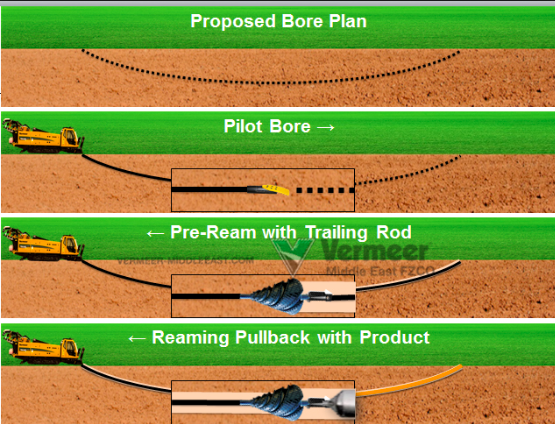
When the tunnel is complete, the pipeline is inserted and pulled through the hole as depicted below.

HDD risks include (i) the hole collapsing before the pipeline can be pulled through or (ii) the pipeline getting stuck during the pull through.

  • Direct Pipe Installation

Direct Pipe is a trenchless method that combines the advantage of established pipeline installation methods of microtunnelling and HDD. Direct Pipe installations may be much shorter and shallower than HDD installations because the excavation is continuously cased, reducing the risk of hole collapse and subsequent settlement.  The Williams Companies, Inc., Subsurface Pipe Installation (2014).

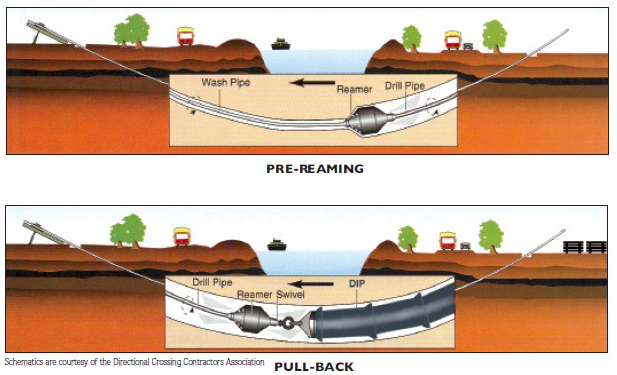
As described above, the HDD method creates the tunnel first and then, as a second step, the pipeline is pulled through it. With direct pipe installations, these two steps happen simultaneously. The direct pipe drilling head is attached to the end of the pipeline, such that as the drill head advances through the earth, the pipeline is pushed/pulled along behind it. The returns from the drilling are delivered back to the surface via umbilicals inside the advancing pipeline.  The below figure illustrates how the drilling mechanism (far left) is attached to the pipeline.

The following figure depicts a direct pipe installation passing beneath a river.

One risk of the direct pipe method is a prolonged mechanical breakdown in the midst of the drill. If the drilling is halted for too long, the pipeline can adhere to the sides of its own tunnel, thereby making it difficult to continue the pipeline’s advance.

  • Drilling Issues in Construction Agreements

The principal contractual issue that arises from drilling is which party bears the risk of a failed hole—or one that is more expensive than anticipated.  Pipeline construction contracts often include “no hole, no pay” clauses, which (i) make the drilling contractor’s compensation contingent on success, and/or (ii) only pay the drilling contractor a fixed fee irrespective of how much it actually costs to complete the hole (or how many times it has to be drilled).  Such clauses can increase the cost of underground installations, since the drilling contractor will build into its price the risk of failure.

There also is the related question of under what circumstances, if any, the drilling contractor’s compensation can be increased. What happens if, for example, the drilling contractor encounters unanticipated subsurface conditions?  Even if sample cores are taken and studied, the conditions may vary between the sampling locations. The agreement should make clear whether the owner or the contractor bears the risk of unknown conditions.

While circumstances vary by project, it is better for such drilling risks to be discussed in advance and addressed in the construction agreement—rather than after a problem develops.

About the Gaille Energy Blog. The Gaille Energy Blog (view counter = 80,240) discusses issues in the field of energy law, with periodic posts at http://www.gaillelaw.com. Scott Gaille is a Lecturer in Law at the University of Chicago Law School, an Adjunct Professor in Management at Rice University’s Graduate School of Business, and the author of three books on energy law (Construction Energy Development, Shale Energy Development,and International Energy Development).

Offshore Pipelines: Visiting the Allseas Solitaire

[Gaille Energy Blog Issue 69]

I recently had the opportunity to tour the Allseas Solitaire pipe layer as it was constructing a natural gas pipeline between the United States and Mexico.  The Allseas Solitaire is 1,302 feet long, longer than a Nimitz class aircraft carrier.

The Solitaire travels with a fleet of smaller vessels that ferry pipe, personnel, and supplies to and from shore.  As our helicopter approached, new pipe was being loaded onto the Solitaire’s deck from a support vessel.

The helipad is perched on the front of the Solitaire, and notwithstanding gusty 35-mph winds, the pilot made the landing look easy.

Our tour commenced with the living quarters for Solitaire’s approximately 500-member crew, which included a cafeteria, hospital, and basketball court.  Then we made our way to Solitaire’s bridge, which offered panoramic views over the vessel.

Views from the Bridge

The walls of the bridge were lined with video monitors showing locations throughout the Solitaire, as well as underwater views of the descending pipeline.  The underwater cameras regularly captured schools of large fish swimming by.

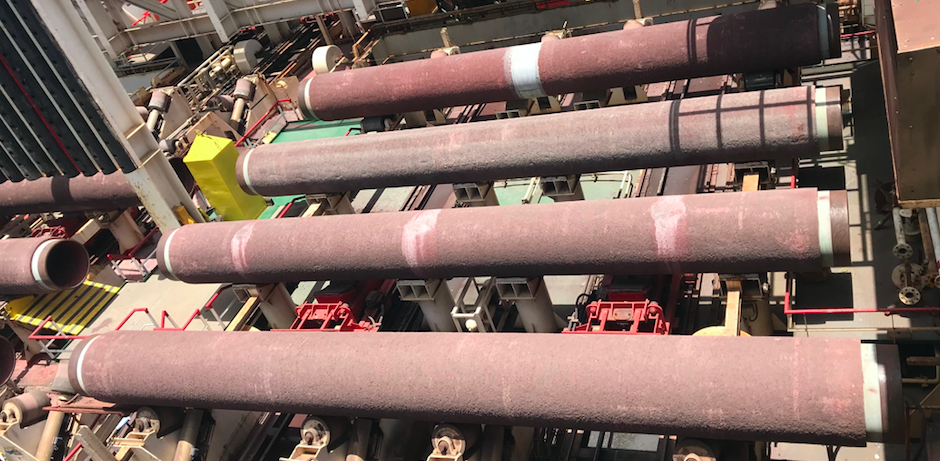
Next on the tour was the rear deck, where stacks of newly loaded concrete-coated pipe were awaiting assembly.

Subsea pipes are coated in concrete to provide enhanced stability. The below figure (from ShawCor) illustrates how concrete coating is applied to the underlying steel:

The pipe is fed from the deck into the firing line, where pipe edges are bevelled in preparation for welding. Crews of welders working at different stations then simultaneously connect several pieces of pipe together.  The firing line is very hot, and personnel wear air conditioned suits to keep them cool in the demanding environment.

The Firing Line

Once the new pipe segments are connected, the Solitaire moves forward, allowing the new section to gradually exit the vessel and descend to the seafloor.  This pipeline lay technique is called the S-lay.

The “S” refers to the shape the pipe forms between the vessel and the seabed as it is laid.  In the S-lay method, single lengths of steel pipe (joints) are welded, inspected and coated in a horizontal working plane (firing line) on board a pipelay vessel. As the vessel moves forward, the pipe gradually exits the firing line, curving downward through the water until it reaches the touchdown point on the seabed. As more pipe is paid out – under its own weight  it assumes the “S”‑shaped curve.  The curvature of the upper section of the pipeline (the overbend) is controlled by a stinger, a steel structure with rollers protruding from the end of the firing line to prevent buckling of the pipe . The curvature in the lower section of the pipeline (the sagbend) is controlled by pipe tensioners, caterpillar tracks that grip the pipe. The amount of tension is one of the most important factors in the capabilities of an S-lay vessel.  Allseas Web Page.

The S-lay is illustrated below:

Below was my view as the pipe exited the Solitaire.

When I first arrived at Vinson & Elkins and started working on global energy projects, I was fascinated by the industry’s extraordinary engineering and technology.  I still am.  Every new project presents the opportunity to learn something new. I remind my students at Rice and Chicago that success in the energy industry often requires being a polymath. One has to develop an understanding of many different fields.  After all, how can you effectively negotiate a pipeline contract if you don’t understand how a pipeline works?

About the Gaille Energy Blog.  The Gaille Energy Blog (view counter = 69,529) discusses issues in the field of energy law, with periodic posts at www.gaillelaw.com.  Scott Gaille is a Lecturer in Law at the University of Chicago Law School, an Adjunct Professor in Management at Rice University’s Graduate School of Business, and the author of three books on energy law (Construction Energy Development, Shale Energy Development, and International Energy Development).

LNG vs. Pipeline Economics

[Gaille Energy Blog Issue 66]

This is a guest blog authored by Ankur Shah, one of my students at Rice University’s Graduate School of Business.  


Royal Dutch Shell says the world could be grappling with a shortage of liquefied natural gas within a decade due to underinvestment in new projects. The Anglo-Dutch energy giant issued the warning in its second annual LNG outlook, which reports on developments in the booming market for natural gas cooled to liquid form for export. Shell says the market for LNG grew by 29 million tons last year, 30 percent more than previously expected. Trading in LNG reached 293 million tons in 2017, up from just 100 million tons at the turn of the century. At nearly 300 million tons, suppliers shipped enough LNG last year to power about 575 million homes, by Shell’s count.  Tom DiChristopher, Shell warns of liquefied natural gas shortage as LNG demand blows past expectations (CNBC Feb. 26, 2018)

While pipelines between nations and continents have traditionally dominated the international gas trade, they offer limited options for re­balancing dynamic markets.  If circumstances change, their owners can reverse directional flows or adjust capacity (by increasing or reducing compression).  In contrast, LNG can respond to market conditions by sending gas to entirely new markets or spreading deliveries across multiple buyers.

The significance of this flexibility is illustrated by the shale revolution’s impact on the United States LNG market.  The United States switched from importing to exporting LNG (Seeking Alpha, “Latest Trends In The Global LNG Market – A U.S. Perspective” (Apr. 23, 2018).

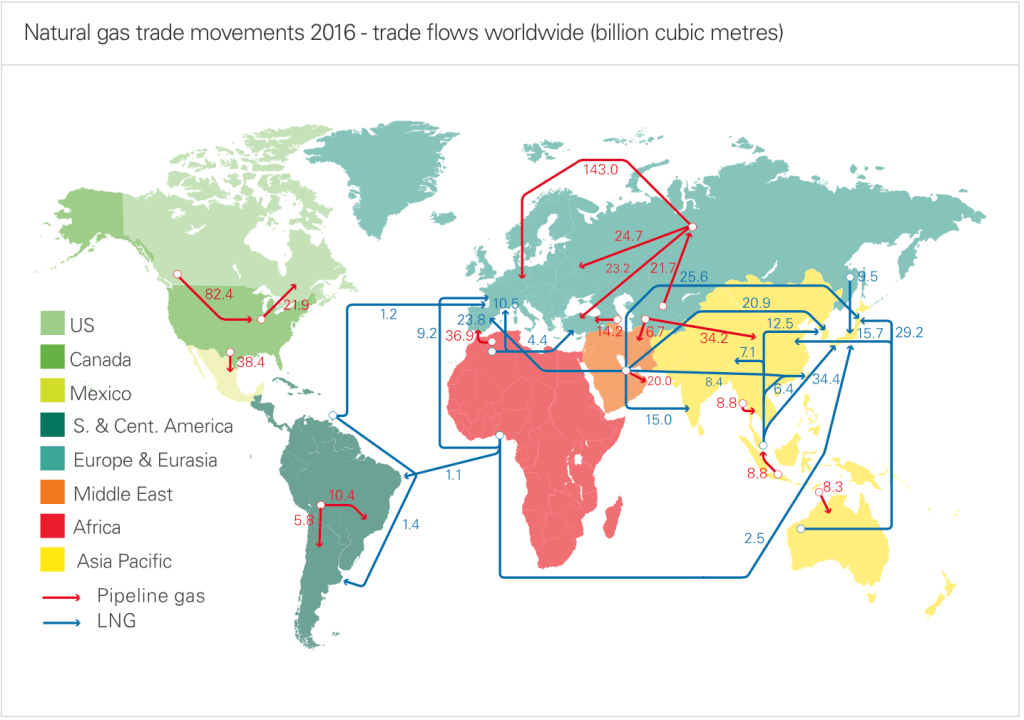
Meanwhile, Latin American and African (planned) LNG exports to the United States were diverted to Europe and Asia (see below figure from bp).

Notwithstanding this flexibility, LNG has faced challenges with respect to its cost profile.

The Cost of LNG

LNG consists of three stages, each of which incurs substantial cost:

  • Step One: Liquefaction Plant

The first step in the chain for transporting LNG is a liquefaction plant. This plant requires an investment of $1.6 to $2 billion dollars for a plant capable of handling 500 million cubic feet per day. Assuming a real rate between 10 to 12 percent, this implies a cost of $1 to $1.30 per thousand cubic feet. Most studies also report costs in that range.  Brito, D., & Sheshinski, E., Pipelines and the Exploitation of Gas Reserves in the Middle East (Baker Institute of Public Policy – Rice University 1997) (the “Rice Paper”).

  • Step Two: LNG Vessels

The second step in the chain is the tanker. LNG must be transported at a temperature of -162 degrees centigrade and requires specialized vessels. These vessels cost $230 million for a 135,000 ton tanker. This is to be compared with a cost $85 million for a 280,000 ton VLCC. The reported shipping rates are $.20 per thousand kilometers or $.32 per mile (Rice Paper).

The below figure provides a further breakdown of vessel costs for various routes:

Screen Shot 2018-05-15 at 5.30.51 PM
  • Step Three: Regasification

The third step is regasification, which typically ranges between “$.35 to $.50 per thousand cubic feet” but can be  “as high as $1.00 per thousand cubic feet” in Japan “due to the high cost of land” (Rice Paper).

The below figure from the Rice Paper shows the variable impact of shipping (Step Two) on delivered price, as a function of distance:

The Cost of Pipeline Transportation

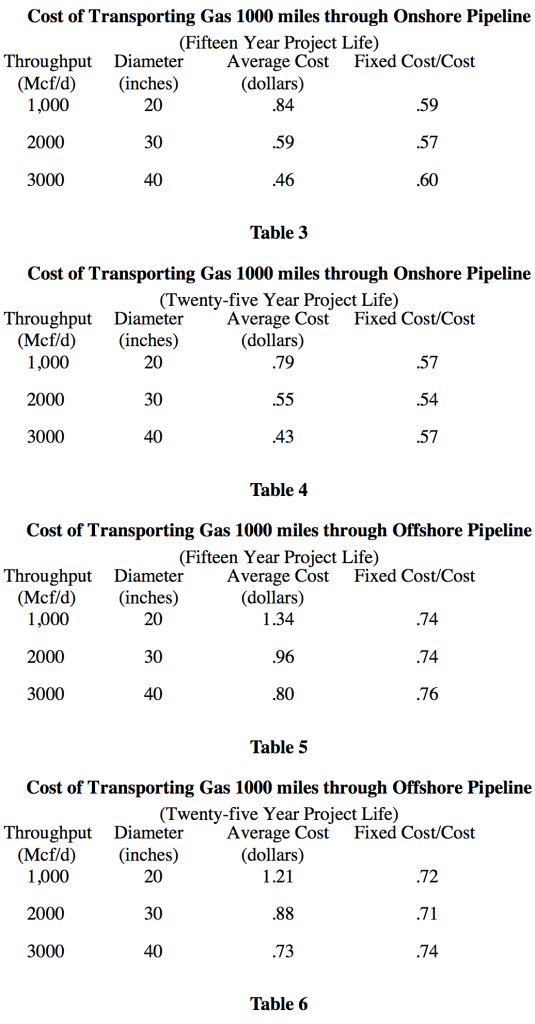
The Rice Paper also examined the cost of transporting gas 1,000 miles through various sizes of onshore and offshore pipelines under assumes 15-year and 25-year project life, including the identification of the fixed cost as a percentage of the average cost (approximately half of onshore pipeline and three-quarters of offshore pipeline costs are fixed):

The Rice Paper assumed $40,000 per mile inch for an onshore pipeline and $100,000 for an offshore pipeline (in 1997), but INGAA data indicates pipeline fixed costs are continuing to increase.

Comparing the Cost of LNG to Pipeline Transportation

The Rice Paper plotted three curves for hypothetical pipeline cost profiles against LNG’s cost curve, revealing likely breakeven points:

More recent studies show even earlier breakeven points (~700 miles and ~2200 miles for offshore and onshore pipelines, respectively):

Technology Appears to Be Reducing LNG Costs

While LNG was initially used over very long distances (for which pipeline projects were not economically justified), technological advances appear to be shifting the breakeven toward shorter distances.  The below figure shows how the LNG cost profile declined somewhat from the 1990s to the 2000s:

Additional technology driving further LNG cost reductions in the 2010s include:

  • More efficient ship designs
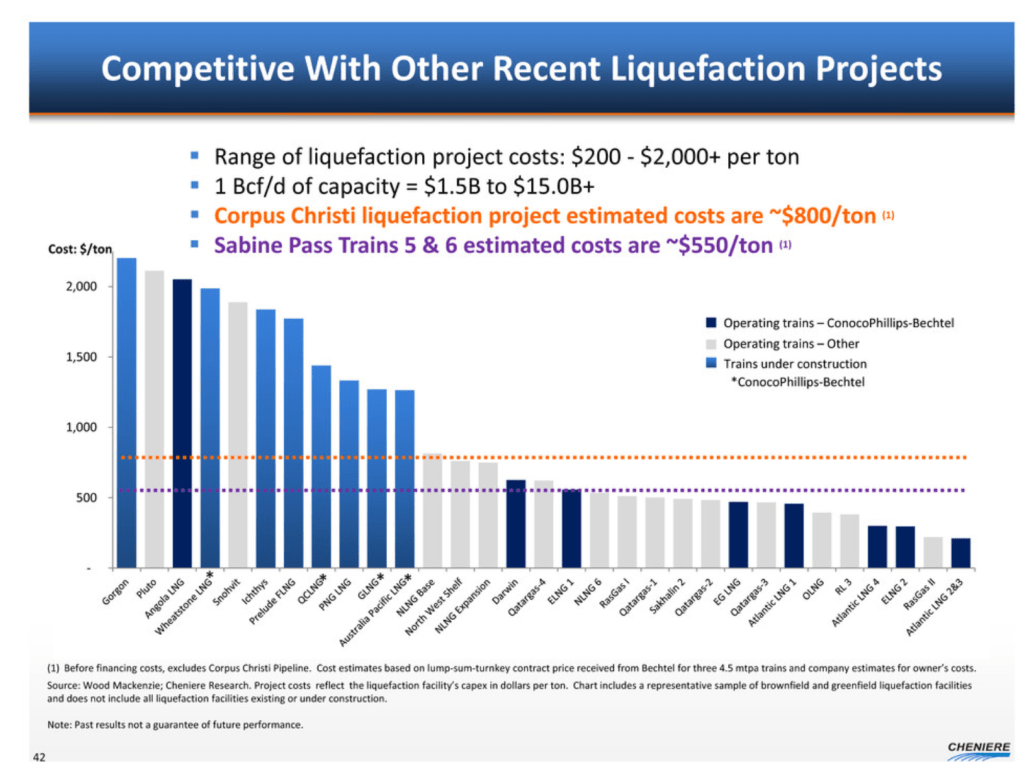
  • Lower United States liquefaction plant costs
  • Floating liquefaction

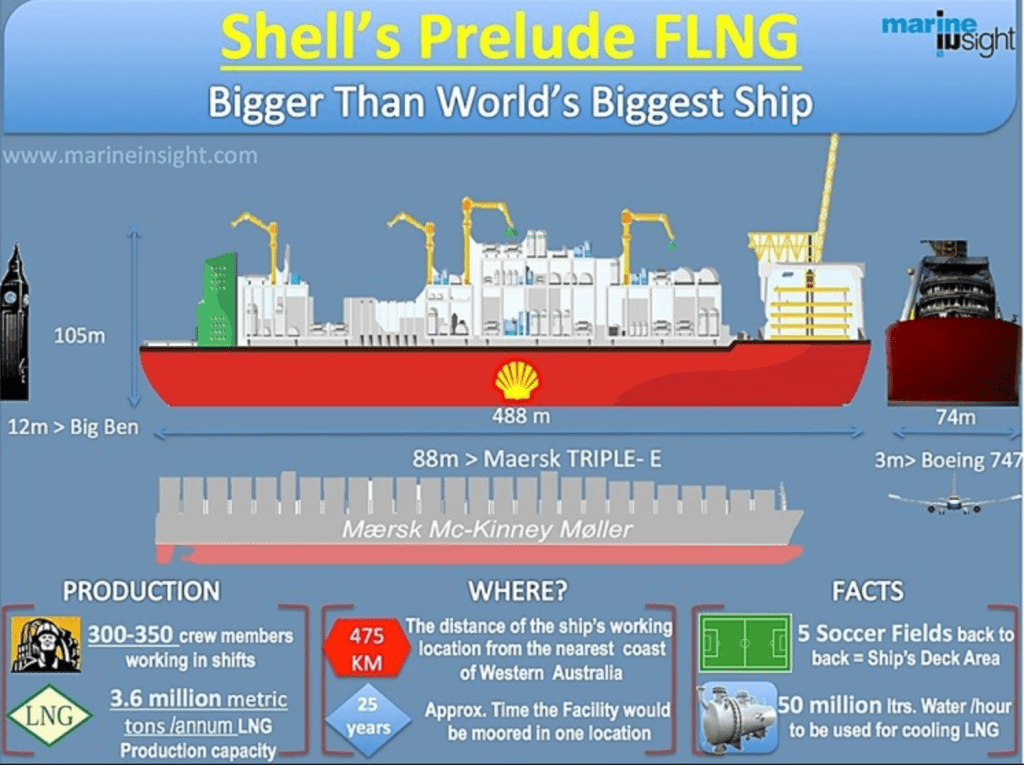
Floating liquefaction enables even more flexibility than traditional (onshore) liquefaction because the origination end of the LNG train also can be relocated in response to market or economic conditions.  With respect to offshore gas discoveries, it also may reduce costs by eliminating the need for pipelines to transport natural gas from offshore wells to the onshore liquefaction plant (the floating liquefaction unit can be positioned on top of the offshore reservoir)

Such technological advances will only further serve to increase global demand for LNG.

Screen Shot 2018-05-16 at 12.08.31 PM

___________________________________________________________________________________

About the Gaille Energy Blog.  The Gaille Energy Blog (view counter = 64,098) discusses issues in the field of energy law, with periodic posts at www.gaillelaw.com.  Scott Gaille is a Lecturer in Law at the University of Chicago Law School, an Adjunct Professor in Management at Rice University’s Graduate School of Business, and the author of three books on energy law (Construction Energy Development, Shale Energy Development,and International Energy Development).

Dr. Ray Irani & the Emperor CEOs: Where Are They Now?

[Gaille Energy Blog]

I was a young lawyer at Vinson & Elkins when one of its partners recommended me for a job in Oxy’s new Dubai office.  My first interview was with Oxy’s General Counsel, Donald de Brier.  When I was escorted into his cavernous office, Donald had his back to me and was gazing toward the distant Pacific Ocean.  His assistant introduced me, and I sat down, but Donald did not acknowledge my presence.  One minute after another passed while I waited patiently for my interview to begin.  Finally Donald spun his chair around and asked:

“I see you went to the University of Texas for college.  Couldn’t you have gotten into a better school?”

Notwithstanding my choice of college, I was offered the job of Legal Manager for Occidental Middle East Development Company, which chased new deals for Oxy’s CEO, Dr. Ray Irani.  Dr. Irani was a graduate of American University in Beirut, Lebanon.  He spoke fluent Arabic and was personally acquainted with many Middle Eastern rulers.

Our team in the Middle East would get 95% of a deal negotiated, and then Irani would arrive on his Boeing Business Jet—a Boeing 737 turned into a flying palace with an office, bedroom, and shower. During one of these meetings, an Abu Dhabi sheikh complimented Dr. Irani’s new BBJ. The sheikh then bragged about how he had a fleet of them, each configured for 24 passengers.  Dr. Irani, witty as ever, quipped back:

“My BBJ is configured for one.”

The sheikh laughed so hard he almost fell over.  When Dr. Irani was in his element among sheikhs and sultans, there was no one more charming.  He remains the best deal closer I have ever seen.  I also had the opportunity to support Irani during Oxy’s 2004 reentry into Libya (after sanctions were lifted):

Irani wanted to be first in line and was granted a meeting at Kadafi’s desert retreat. Speaking in fluent Arabic, the Lebanese-born Irani made his pitch – even though Kadafi seemed noncommittal.

“He was courteous, but clearly he wanted us to have a cup of coffee and leave,” Irani recalled.

But the 70-year-old Irani pressed on, Kadafi kept listening and the pair met again two months later. Then, in January, Libya awarded its first batch of 15 exploration sites – with nine going to Occidental.

“That’s not a bad batting average,” Irani said in an interview. “I was pleasantly surprised.”  James F. Peltz, “Well-Oiled Turnaround” (Los Angeles Times, June 5, 2005).

Dr. Irani was the second CEO in Oxy’s storied history—succeeding Armand Hammer, who ran Oxy until his death at 92.  Irani’s reign as Emperor of Oxy lasted for ~23 years.  His 2013 departure was the result of a “brutal boardroom struggle” with his chosen successor, Steve Chazen. Clifford Krauss, “Occidental Chairman Agrees to Step Down Ahead of Schedule” (New York Times, May 3, 2013).

Notwithstanding his premature exit, Dr. Irani’s tenure at Oxy was impressive.  During his time at the helm, Oxy’s market cap increased 15-fold.  Irani’s best (personal) year was 2006, in which he earned ~$460 million, mostly from equity gains.  While such extreme payouts made Irani the target of executive compensation crusaders, many believed he was worth it:

The rebound “has been nothing short of spectacular,” analyst Ben Dell of Sanford C. Bernstein & Co. wrote in a report . . . Occidental is “one of the few genuine turnaround stories” in the exploration-and-production industry, he added.  James F. Peltz, “Well-Oiled Turnaround” (Los Angeles Times, June 5, 2005).

How’s he doing now?  The 82-year-old Irani has a net worth of ~$1.5 billion, and he’s been selling off Oxy stock to fund his charitable endeavors and investments elsewhere:

Working out of his Westwood family office, Irani further diversified his portfolio, which includes investments in medical-related real estate properties, private equity, and bonds. . . . He is a trustee of USC, his alma mater. Irani donated $20 million toward the university’s under-construction USC Village complex. . . .  His wife, Ghada, was recently named to Unicef’s national board.  “Wealthiest Angelenos” (Los Angeles Business Journal, August 28, 2017)

During my time at Oxy, I had the opportunity to interact with several other Emperor CEOs:

  • Exxon’s Lee Raymond.  This quote from Lee Raymond summed up his view of the world—“We see governments come and go.”  Raymond was the emperor of emperor CEOs, and he knew it.  I saw him in action at a closing ceremony, where he wanted little to do with the other two CEOs in the room—who were both from smaller multi-billion dollar companies. Raymond retired from ExxonMobil with a $400 million package at the end of 2005. The 79-year-old Raymond currently serves on the Board of Directors of JPMorgan Chase.
  • Total’s Christophe de Margerie.  While at Oxy, I spent a year as the Senior Advisor for Gas Marketing to the Dolphin Gas Project—a 2 bcf per day Qatari gas field development and pipeline jointly built by Oxy, Total, and the government of the United Arab Emirates.  At various Dolphin events, I had the opportunity to become acquainted with Christophe de Margerie.  He reminded me a lot of Dr. Irani—another larger-than-life deal closer.  De Margerie boasted that “[n]othing replaces human warmth and handshaking.  You don’t win a contract by telephone.”  Sadly, his private jet crashed in 2014, ending his life and career prematurely at age 63.
  • BP’s Lord John Browne.  I first met Lord Browne at the World Petroleum Congress in Johannesburg, South Africa, when he was still CEO of BP. Not long after our first meeting, he left BP and joined Riverstone.  I had been working with Riverstone for several months to finalize the firm’s backing for round two of my African oil and gas exploration company—Passenger Energy Partners.  I recently sold my first company (which had acquired interests in Cameroon, Madagascar, and South Africa) and was looking for $100-$200 million of equity to build a new portfolio of non-operated interests in West and East Africa.  The “Passenger” name came from my concept of riding alongside first-class operators such as ExxonMobil, Anadarko, and BHP—letting them absorb all the risks of operatorship.  After a few trips to New York, I had the backing of Riverstone’s board—except for Lord Browne.  I flew to London for a one-on-one meeting to change his mind. Browne was a formidable opponent for my non-operated concept because he had an “operator only” philosophy at BP.  I was unable to win him over. In 2015, Lord Browne resigned from Riverstone to become “Executive Chairman of L1 Energy, an oil and gas investment vehicle which acts as a subsidiary of LetterOne Holdings, co-owned by Russian billionaire Mikhail Fridman.” Wikipedia.
  • Anadarko’s James Hackett.  Hackett is now a partner at Riverstone and CEO of Silver Run II, a $1 billion publicly-listed energy investment fund.  Hackett also is on the faculty of Rice University.
  • ConocoPhillips’ James Mulva.  Mulva exited with a $260 million package in 2012 and currently serves on the Boards of Directors of General Electric and General Motors.  He has made significant donations to the University of Texas at Austin, including $50 million to create the Mulva Clinic for Neuroscience.

All of these personalities could sit with world leaders as equals—wielding power that, for better or worse, few current industry CEOs have.  When one of these men made a promise, everyone knew it would be kept.  At their heyday, no one was second-guessing them.  Were these CEOs any more talented than their companies’ current leaders?  Probably not.  But they were able to do more—because of their authority.  Maybe such supremacy gave them the confidence and presence to stand toe-to-toe with kings, emirs, sultans, sheikhs, and, well, dictators.

Over the last decade, the Internet has lessened the power of CEOs.  Their every move is subject to criticism on social media and message boards.  Boards of directors are more powerful than they used to be, too.  While the transparency created by the Internet has rightfully ended the careers of many who should not have been CEOs, it also has shackled and diminished those who could have been great ones.

We now live in an age in which there are no heroes.  Even past heroes’ mistakes are dissected, paraded about, and focused on until that’s all anyone remembers about them.  The current state of affairs brings to mind a Japanese proverb: The nail that pops up is always hammered down.  Our current crop of industry CEOs may be more focused on survival than achieving greatness.

About the Gaille Energy Blog.  The Gaille Energy Blog discusses issues in the field of energy law, with periodic posts at www.gaillelaw.com.  Scott Gaille is a Lecturer in Law at the University of Chicago Law School, an Adjunct Professor in Management at Rice University’s Graduate School of Business, and the author of three books on energy law (Construction Energy Development, Shale Energy Development, and International Energy Development).

Energy Construction: Classification of Contracts

[Gaille Energy Blog Issue 55]

Construction agreements bring to bear both tangible materials and intangible services to achieve an end product—the facility. As such, many of the same terms and conditions used in construction agreements also appear in procurement and services contracts. Procurement agreements are used primarily for purchasing and leasing tangible goods, materials, and equipment—whereas services agreements are used primarily for securing intangible skills.

The following figure provides a simple classification of industry agreements according to three functions: (i) works; (ii) services; and (iii) goods.

As the figure shows, the industry has created many variations of construction, services, and procurement agreements to meet its needs. The overlapping circles represent how the functions often overlap within any agreement (e.g., a purchase order may also include installation services).

  • Construction Agreements.  Construction agreements require a contractor to construct a facility designed by the owner (the “Sponsor�?) using materials mostly procured by the Sponsor.
  • Engineering, Procurement, and Construction Agreements (“EPC�?). EPC agreements—as the name implies—add two categories of contractor responsibility: (i) engineering—the contractor is responsible for the detailed engineering and design of the project; and (ii) procurement—the contractor is responsible for tendering, purchasing, and coordinating substantially all materials.
  • Engineering, Procurement, and Construction Management Agreements (“EPCM�?).  Whereas an EPC agreement places more responsibility on the contractor, the contractor under an EPCM agreement does not undertake the construction itself. Rather, EPCM contractors act as managers of the construction—hence the “CM�? of EPCM. The EPCM contractor is usually an engineering firm charged with providing professional services to the sponsor, particularly the management of engineering, procurement, and construction. In addition to the fees for its services, the EPCM contractor also may receive a bonus if, for example, the ultimate cost of the project is less than its target price.
  • Service Orders.  Service orders typically are fill-in-the-blank documents used for small projects. The front of the service order identifies the contractor, the start date, the termination date, a description of the services, the price for the services, and a cap on the total amount of payment under the order (“not to exceed $x�?). On the back of the service order are boilerplate terms and conditions that usually are not subject to negotiation.
  • Service Agreements. Higher-value or riskier service arrangements may be subject to stand-alone agreements with more extensive provisions tailored to the specific needs of the parties.
  • Purchase Orders.  The front of the purchase order identifies the vendor, the date of the purchase, the delivery date, the delivery location, the shipping terms, a description of the goods, equipment, or materials, a reference to attached or incorporated specifications, pricing, payment terms and timing, liquidated damages for late delivery, and a cancellation schedule including amounts payable for cancellation of the order at various points by the Sponsor. On the back of the purchase order are boilerplate terms and conditions that usually will not be negotiated by the Sponsor.
  • Purchase Agreements. Higher-value or riskier procurements may be subject to stand-alone agreements with more extensive provisions tailored to the specific needs of the parties. For example, pipe purchase agreements entail the manufacturing of steel pipe for natural gas and oil pipelines.
  • Standing or Master Agreements.  Standing or master agreements are designed to establish the terms and conditions for multiple projects over a period of time when the nature and scope of the work needed for the projects is unknown at the outset. Rather than negotiate a series of independent construction or services agreements—one for each scope of work—the standing or master agreement provides standard terms and conditions applicable to all future work. The bulk of the terms do not need to be renegotiated with each transaction. The parties only need to focus on the commercial terms for the specific work being commissioned. Whenever a new project is needed, the Sponsor provides a release order that summarily describes the scope of work, specifications, schedule, and pricing. The contractor is then required to comply with both the release order itself and the more detailed provisions of the standing or master agreement.
    • Master Construction Agreements (“MCA�?).  MCAs are utilized for engaging a contractor for a series of smaller construction jobs, none of which justifies a full construction agreement. Each time the Sponsor wishes to commission a new project, it issues to the contractor a release order that describes the construction needed.
    • Master Services Agreements (“MSA�?).  The MSA functions similarly to the MCA, in that it provides both (i) a framework for the Sponsor’s issuance of a service order and the contractor’s acceptance of the service order, and (ii) terms and conditions that apply to any service order released under it.
    • Master Purchase Agreements (“MPA�?).  The MPA is the procurement equivalent of the MCA and MSA.  It establishes common terms and conditions for future purchases.  When the Sponsor needs to procure goods covered by the MPA, it can do so more expeditiously because the purchase order’s terms and conditions have already been agreed to by the vendor.   
  • Hybrid Agreements.  Certain agreements used in construction and procurement are difficult to characterize as works, services, or goods.  One example of a hybrid agreement is a concrete coating arrangement (after the purchase of the pipe from a vendor). Pipe destined for marine environments usually is concrete coated for purposes of providing ballast and stability.  While industry practice varies, a stand-alone installation of concrete coating on pipe (that is owned by the Sponsor) seems more in the nature of works—that is, construction. The Sponsor is looking to the concrete coater to deliver an integrated whole that requires it to accept and handle the Sponsor’s materials (pipe), procure the feedstock for the concrete, and execute the installation of the concrete onto the Sponsor’s pipe. As such, the best starting point for a concrete coating agreement is usually a construction agreement, as the responsibilities, liabilities, and indemnities being assumed by the contractor are similar.

Construction Energy Development offers a further description of the typical provisions utilized in various construction and procurement agreements.

About the Gaille Energy Blog.  The Gaille Energy Blog discusses issues in the field of energy law, with weekly posts at http://www.gaillelaw.com.  Scott Gaille is a Lecturer in Law at the University of Chicago Law School, an Adjunct Professor in Management at Rice University’s Graduate School of Business, and the author of three books on energy law (Construction Energy Development, Shale Energy Development, and International Energy Development).